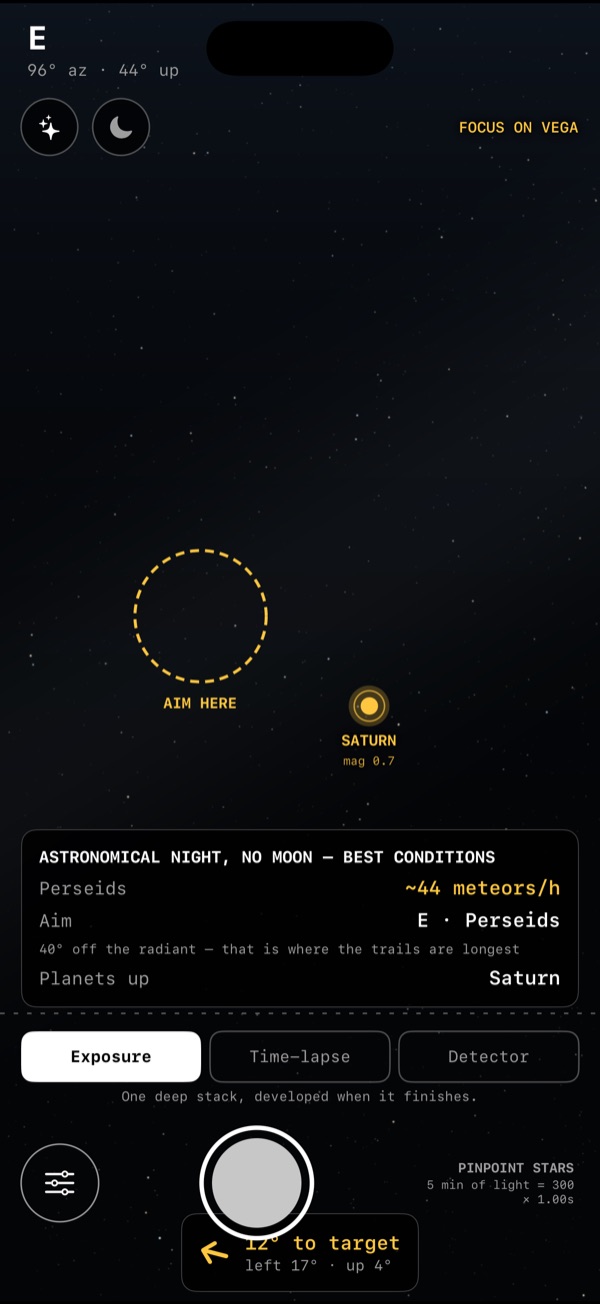
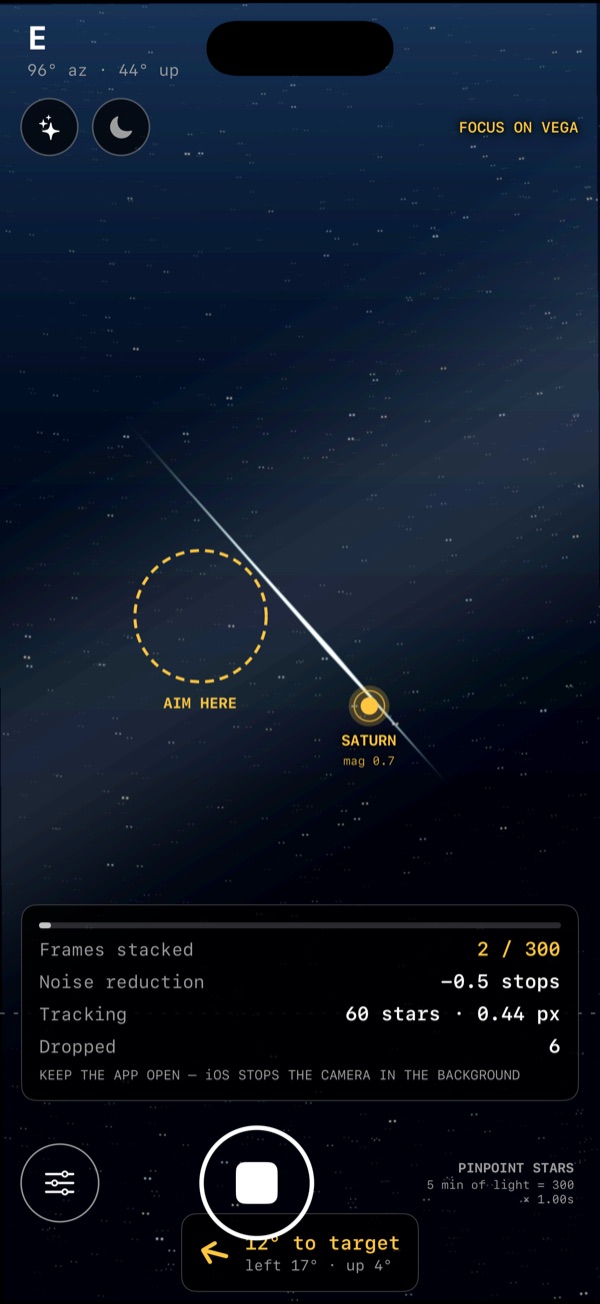
An iPhone frame caps at one second. Starlapse stacks hundreds of them into a long exposure, aligned on the stars, and tells you where to point tonight.
FREE · PRO $4.99 ONCE · NO ACCOUNT · NO ADS

How it works
Each one contradicts something people bring from DSLR astrophotography.
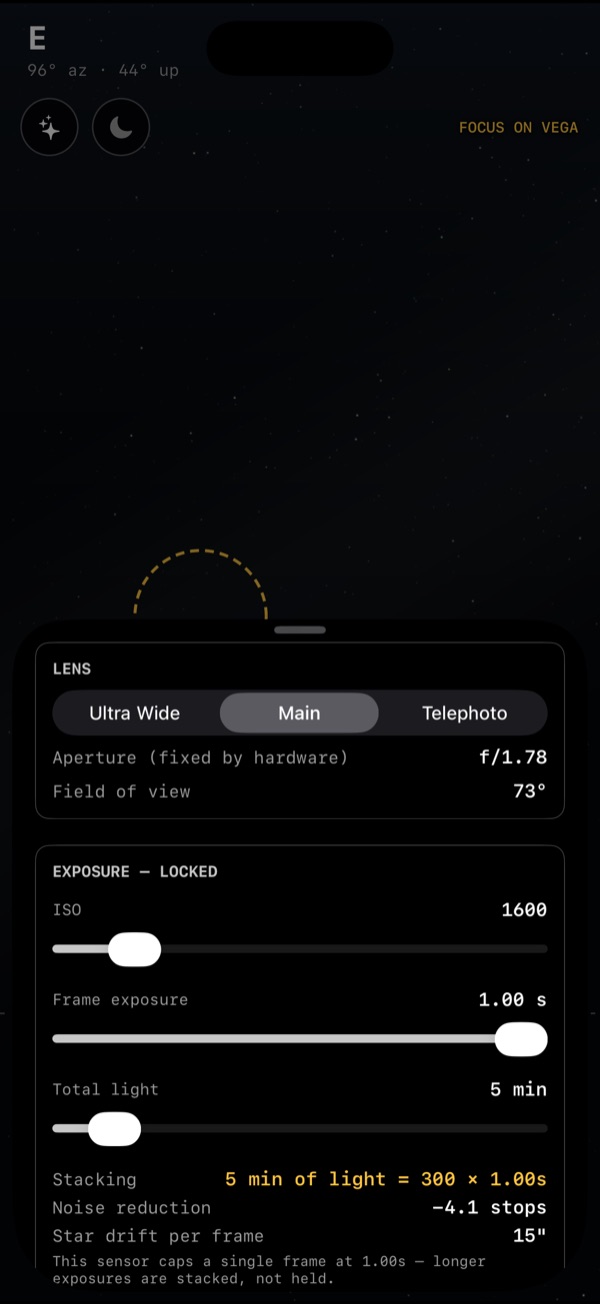
So Starlapse stacks: hundreds of one-second frames, aligned on the stars, become one exposure of ten minutes or an hour. Noise falls with every frame.
Set once and held for the whole session. The exposure does not creep up and the autofocus does not hunt in the dark.
The infinity mark is a mechanical end stop, and the sharp point sits just inside it. The app steps the lens, measures how big the stars come out, and settles on the smallest, the way observatories focus.
What it does
Frames aligned on the sky, so stars stay points through an hour of stacking.
The sky’s rotation drawn as arcs while the ground stays sharp.
Each frame of the video is a stack of its own, so a night of clouds stays clean.
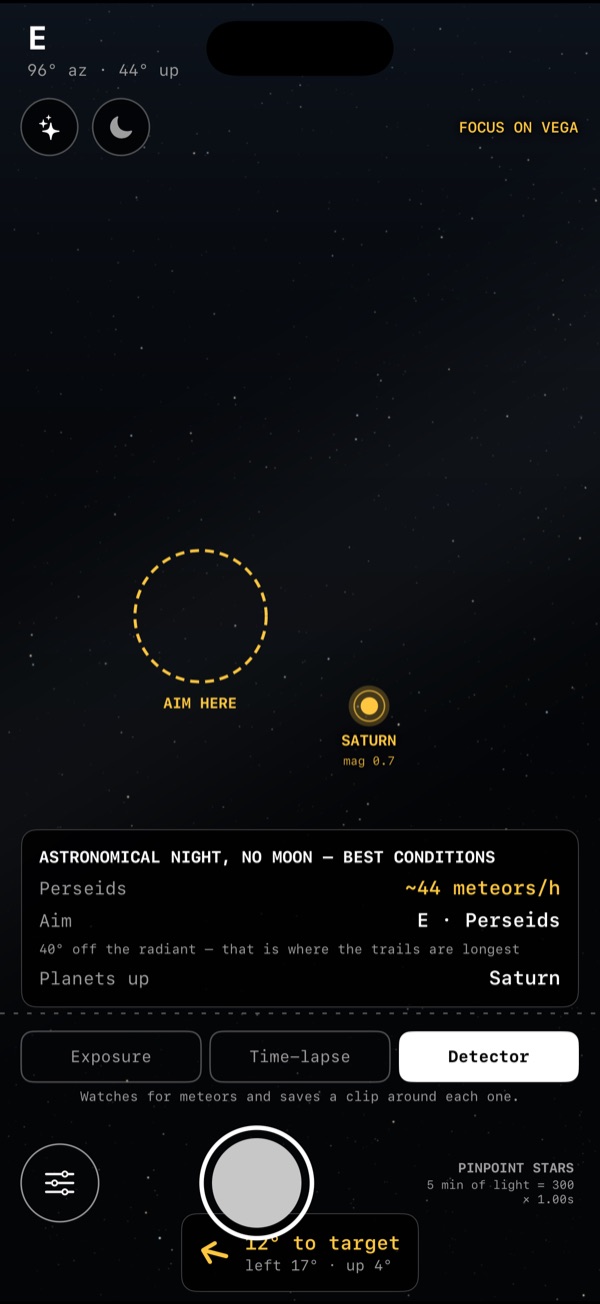
Watches the sky and keeps a clip of anything that crosses it, placed on the sky and named by its shower.
Meteors streak away from the radiant, so the longest trails are 40° off it. Worked out for your place and hour, clear of the Moon.
A reminder on the evening of each shower worth staying up for from where you are. Local, nothing sent.
New in 1.1
The stars in a stack are a light meter. Starlapse finds them among 9,096 catalogue stars and compares each with the sky right around it. The result is what a Sky Quality Meter reads: magnitudes per square arcsecond, with the Bortle class and the faintest star your eye could see.
If you choose to, the reading and the photo go into a dataset for mapping light pollution, with your location rounded to about 10 km. A night-sky globe built from it is next.
Questions
Not in one frame: the sensor caps a single exposure at about one second. Starlapse takes hundreds of one-second frames, aligns them on the stars, and combines them, so ten minutes or an hour of light ends up in one picture with far less noise.
Yes. Stacking takes minutes, and the phone has to stay still for all of them. Any small tripod or a stable surface works.
Any iPhone on iOS 18 or later. The lens with the widest aperture gathers the most light; the app shows the f-number of each lens and what it gives up.
Not at the radiant: meteors streak away from it, so the longest trails appear about 40° to the side. Starlapse works that out for your location and the hour, keeps you clear of the Moon, and shows an arrow to the spot.
The stars in a stack are a light meter. The app identifies them in the Yale Bright Star Catalogue, compares each with the sky right around it, and reports the sky brightness in magnitudes per square arcsecond with a Bortle class, the way a Sky Quality Meter does.
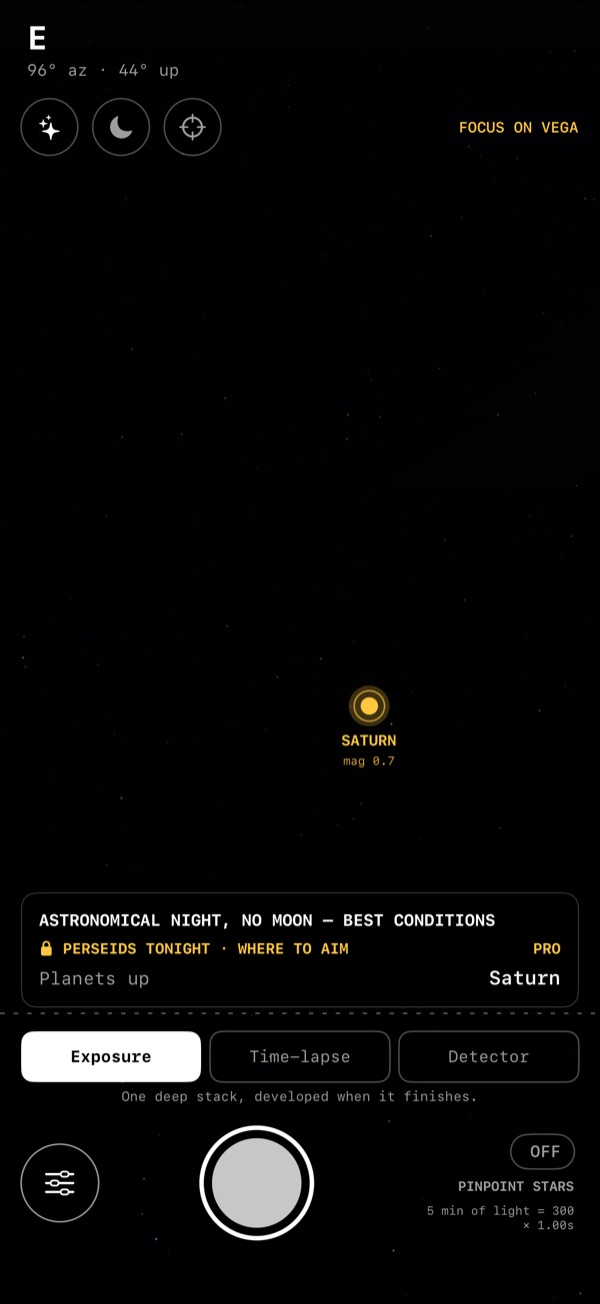
Yes, every camera feature is free. Starlapse Pro is a one-time $4.99 purchase that adds meteor shower events and where to aim for them. No subscription and no ads.
Limits
OPEN SOURCE · GITHUB.COM/FORTUNTO2/STARLAPSE